Bridge Authors: The Writers Who Cross Cultures and Change Understanding

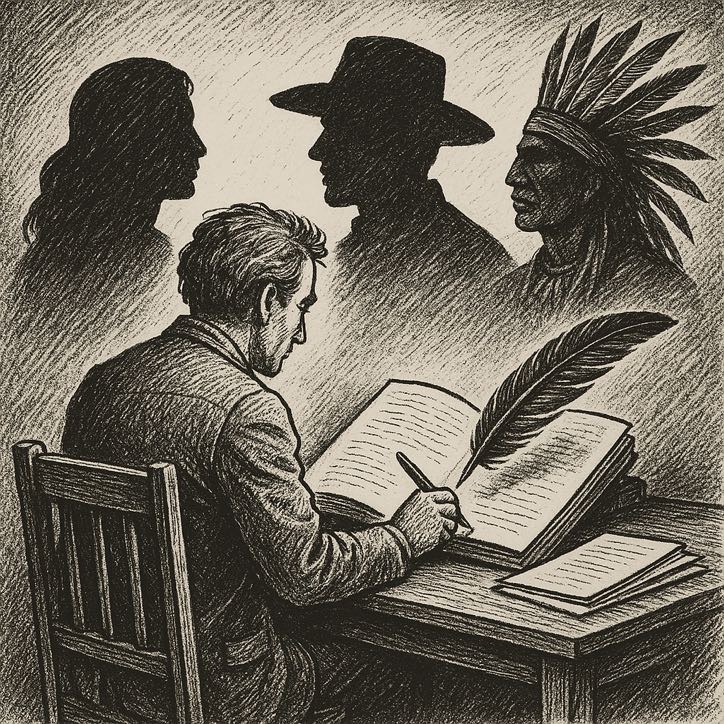
Literature has always been a meeting place — a shoreline where one world touches another. Across history, certain writers have stood on that shoreline and built bridges: not by belonging to the cultures they wrote about, but by studying, listening, imagining, and attempting to understand them with enough care that their work opened doors for readers who might otherwise never cross that distance.

These “bridge authors” have shaped public empathy, national mythologies, and even educational curricula. Their work complicates the idea that stories must only be told from within; instead, they demonstrate that sometimes an outsider — with humility, discipline, and a storyteller’s gift — can help illuminate a world to those who would not encounter it on their own.

Thomas King is one such figure, even though the circumstances around his ancestry add a layer of complexity. But to understand King’s place, it helps to trace the long tradition he belongs to.

I. What Makes a “Bridge Author”?

A bridge author is someone who:

  • Writes extensively about a culture they were not born into
  • Does so with enough depth to shape public imagination
  • Reaches readers who might otherwise never engage with that culture
  • Influences education, popular understanding, or political attitudes
  • Either amplifies marginalized voices or reframes history in ways that invite understanding

These writers do not replace voices from within those cultures; rather, they create entry points for wider audiences.

Sometimes they get it right.

Sometimes they get it wrong.

Often, they do both.

But their work undeniably moves the conversation.

II. The Long Line of Bridge Authors

Throughout literary history, several authors have impacted public understanding of cultures they were not part of:

Alex Haley — Roots

Though based partly on family oral history, Haley constructed a fictionalized genealogy that became one of the most influential works about African and African-American history ever written. It invited millions of readers to confront the legacy of slavery.

Gary Jennings — Aztec

Jennings’s sprawling Mesoamerican narratives inserted Indigenous Mexican history into the mainstream imagination with unprecedented vividness.

Pauline Gedge — Ancient Egypt

Her novels brought emotional depth to ancient Egyptian lives, influencing classrooms, amateur historians, and pop culture alike.

James A. Michener — Japan, Israel, the Pacific

Michener traveled, researched, and devoted entire books to cultures far from his own roots. For many Western readers, his novels were the first exposure to those histories.

Pearl S. Buck — China

Her depictions of rural Chinese life humanized a culture many Westerners considered distant or incomprehensible.

Colleen McCullough — Rome

Her Masters of Rome series is still used to help readers visualize the politics and culture of ancient Rome.

These authors wrote as outsiders, but their works touched global audiences and reshaped public memory.

III. Thomas King: A Bridge Author by Circumstance and Contribution

Thomas King’s recent genealogical revelations — that he does not possess the Indigenous ancestry long believed — have raised difficult questions about identity and representation.

But his position as a bridge author remains unchanged.

Why? Because a bridge is defined by the traffic it carries, not by who built it.

King:

  • Made Indigenous history accessible to everyday Canadians
  • Helped non-Indigenous readers understand Indigenous humour, myth, trauma, resilience, and worldview
  • Influenced curricula in high schools and universities
  • Used satire to cut through defensiveness and open genuine reflection
  • Helped normalize Indigenous literature as “mainstream literature,” not a niche shelf

Even if his work would not have been published at the scale it was had his ancestry been known, the impact it created is real — and that impact fits the definition of what bridge authors do.

IV. The Role of Publishers and Gatekeeping

You raised an insightful point: it’s not necessarily that cultures lack voices — it’s that publishers have historically acted as gatekeepers, determining which voices reach mass readership.

Consider:

  • For much of the 20th century, Indigenous authors were ignored by major presses.
  • Many Black writers needed white intermediaries to be taken seriously.
  • Historical fiction set in Egypt, Rome, or Mexico often favored non-local authors with Western credentials.
  • Dime novelists wrote the American West while the actual Peoples of the West faced genocide or displacement.

When the doorway is barred, sometimes it is the “bridge author” who muscles it open.

This doesn’t justify misrepresentation.

It doesn’t erase ethical questions.

But it does explain why certain outsiders become cultural interpreters — they are given opportunities that insiders historically were denied.

And sometimes, they use those opportunities to broaden understanding rather than distort it.

V. The Double Edge of Bridge Authors

Bridge authors can either:

1. Expand empathy

By presenting marginalized cultures as complex, human, humorous, intelligent, and worthy of dignity.

2. Or reinforce stereotypes

By imposing outsider fantasies or colonial narratives.

Many do both at once, because writing across culture is always imperfect.

The real test is whether their work leads toward understanding or misunderstanding.

VI. Why Bridge Authors Still Matter Today

In an ideal world, all cultures would have equal access to publishing, education, and literary authority.

But we do not live in that world.

Until gatekeeping disappears — until Indigenous, Black, Asian, Middle Eastern, Traveller, Sámi, and other voices can publish and reach readers without barriers — bridge authors remain part of the ecosystem of cultural learning.

They are not substitutes.

They are not superiors.

But they can be door-openers.

Thomas King, for all the complications around heritage, is one of the most effective door-openers Canada has ever had regarding Indigenous issues.

VII. Conclusion: The Storyteller’s Role Transcends Origin

Bridge authors raise difficult questions about authenticity, cultural rights, and representation. But they also remind us that:

  • Listening matters.
  • Craft matters.
  • Intent matters.
  • Impact matters.

A story told with respect and care can cross boundaries that politics and identity cannot.

Thomas King’s work opened the door for thousands of readers — and for countless Indigenous writers who followed.

His contribution stands, even if the ancestry behind it does not.

Because sometimes, the bridge is not the builder’s birthplace.

It is the direction they help others walk.

Imagine a World…

Imagine a world that is dark and dreary, threatening and chaotic, a world that exists only to torment a young woman who is alone and desperate to be loved, connected…normal. Now, imagine her survival chances.

But wait! This girl isn’t just any sweet thing. This young woman has developed survival skills that don’t serve her in a happy life, but empower her to fight against the ever-suffocating forces that are attempting to bury her before her time. Now, imagine her survival chances.

Love hurts… but lonliness hurts more.

Imagine the challenges she must overcome to find love. Imagine how difficult it is for her to keep love, once the universe sniffs out her happiness. Imagine the predators who can spot vulnerability with their twisted senses. Oh yes, this young lady has a challenging journey ahead of her, one that would destroy most “normal” people.

This is the character I love to place in such a world. This is what I write about. Perseverance, resiliance, overcoming the odds, and lifting the underdog high beyond their own imaginings.

You can stop imagining now. I’ve done the clever creating for you. You can just sit back and enjoy the stories.

  • Start small with Jeanie and see how her psychotic episode with plants creates a new life for her and her husband. (Adult/Teen Picture Book)
  • Dig deep into the seedy side of societial sin with Valerie as she takes on the investigation of a small town rape. (Adult/Teen Scrapbook Mystery)
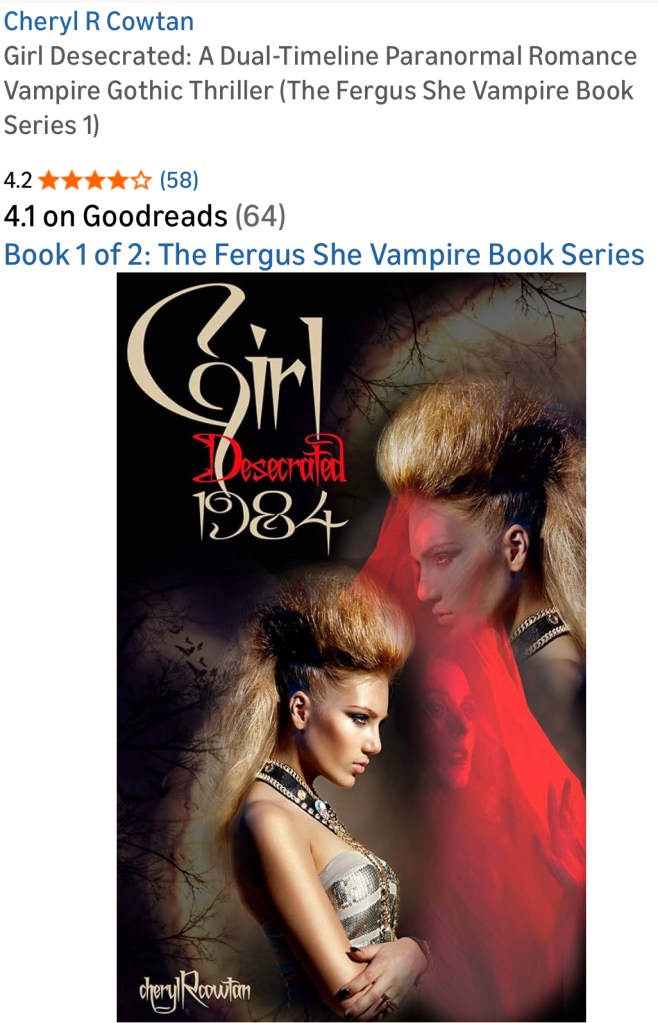
  • Take a thrill ride to the 1980s with Rachel. She’s turning 18, and that inner voice that was up-to-no-good, becomes a full-blown possession. Rachel must uncover the secrets of her heritage in order to prevent Scarlett from stealing her life, her lover and her body. (Vampire Book Series, Adult Supernatural Thriller)
  • Stand by Laywren’s side, sword drawn and heart proud and pounding as her warriors wage battle against the unnatural beasts raging across the lands. Laywren is on an epic journey to clear her world of evil and restore the balance of nature. But her Goddess has lost power, and her people have lost the ability to have children. This fight will be against desperation and loss of faith, as much as it is against blood and bone.

Welcome to my site. I’m an award-winning author who loves a good reader. Click here to check out my collection of highly-rated books. I hope you find enjoyment, solace, chills and thrills in my works.

Kind Regards,

Cheryl R Cowtan